
How Magnetic Drills Are Manufactured: Complete Step-by-Step Process and Magnetic Materials Explained
Magnetic drills, also known as magnetic drill presses or mag drills, are essential tools in metalworking, construction, and fabrication industries. They allow for precise drilling into metal surfaces by using a powerful magnetic base to secure the drill in place, eliminating the need for clamps or fixtures. This article explores the manufacturing process of these versatile machines, from raw materials to final assembly, while also delving into the magnetic materials that make them effective. We'll break it down step by step, drawing on insights from industry practices at manufacturers like BDS Maschinen in Germany and others.
What Are Magnetic Drills?
Before diving into manufacturing, it's helpful to understand the tool itself. A magnetic drill consists of several key components:
- Magnetic Base: The core feature that attaches to ferrous (iron-containing) surfaces using either an electromagnet or permanent magnets.
- Drill Motor: A high-torque electric motor that powers the drilling action.
- Arbor or Chuck: Holds the drill bit or annular cutter.
- Frame or Body: Typically made from durable metals like aluminum or steel for stability.
- Controls and Safety Features: Switches, handles, and sensors for safe operation.
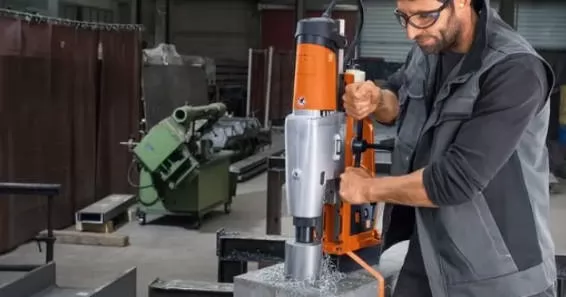
These drills are portable yet powerful, capable of handling large-diameter holes in thick metal plates. They are widely used in shipbuilding, bridge construction, and industrial maintenance.
Magnetic Materials Explained
The "magic" of magnetic drills lies in their ability to generate a strong magnetic field for adhesion. There are two main types of magnetic systems: electromagnetic and permanent magnet-based. Below, we explain the materials involved and their manufacturing processes.
Electromagnetic Systems
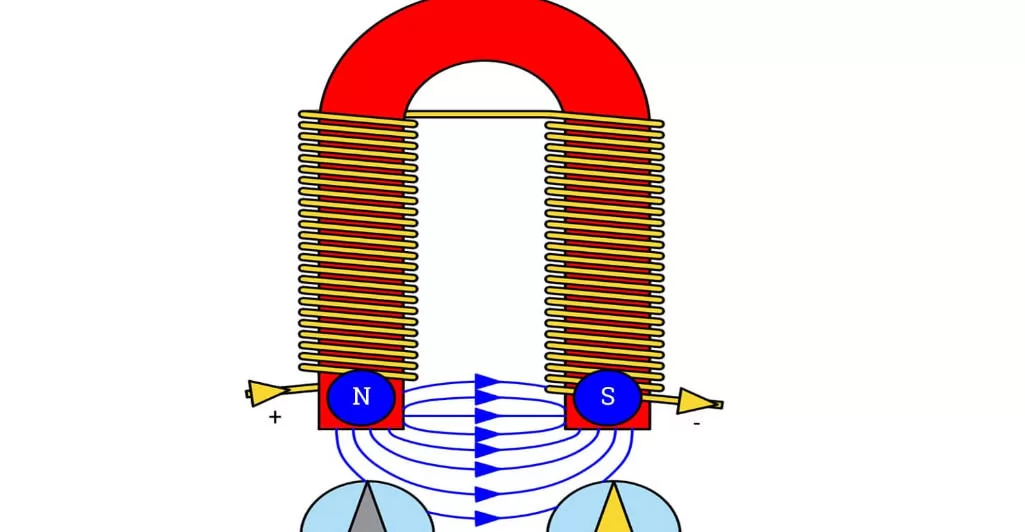
Most professional magnetic drills use electromagnets because they can be easily turned on and off, allowing for quick repositioning. An electromagnet consists of:
- Coil: Made from insulated copper wire, wound around a core to create a magnetic field when electricity flows through it.
- Core: Typically soft iron, steel, or ferromagnetic alloys that amplify the magnetic field. These materials are chosen for their high permeability (ability to conduct magnetic flux).
Manufacturing of Electromagnetic Coils:
- Wire Preparation: High-purity copper wire is insulated with enamel or polymer to prevent short circuits.
- Winding: The wire is wound onto a bobbin or directly around the core using automated coil-winding machines. For magnetic drill bases, coils are often U-shaped or rectangular to fit the base geometry. Winding involves precise layering to maximize field strength—typically 100-500 turns depending on the design.
- Core Insertion: A ferromagnetic core is inserted into the coil. The core is machined from iron bars or cast from molten alloys.
- Encapsulation: The assembly is encased in epoxy or plastic for protection against dust, moisture, and vibration.
- Testing: The coil is energized to measure magnetic holding force (often 1,000-20,000 Newtons for drills).
Electromagnets require a power source, usually from the drill's motor circuit, and include safety features like automatic shut-off if power fails.
Permanent Magnet Systems
Some compact or specialized magnetic drills use permanent magnets, which don't require electricity but are harder to deactivate. These are made from rare-earth materials for maximum strength in a small size.
- Key Materials: Neodymium-iron-boron (NdFeB) is the most common due to its exceptional magnetic strength (up to 1.4 Tesla). Alternatives include samarium-cobalt (SmCo) for high-temperature applications or ferrite for cost-effective options.
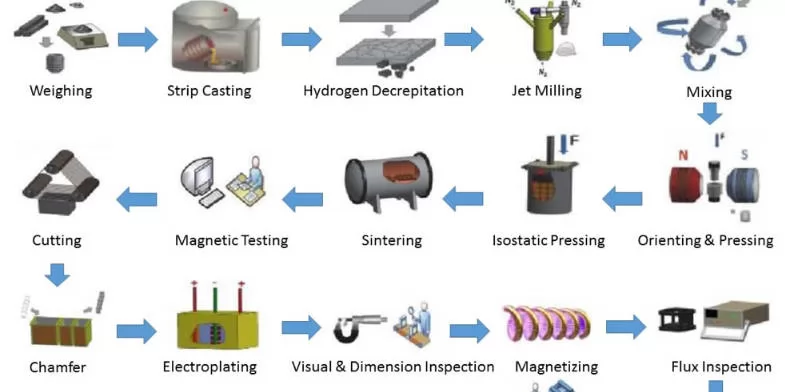
Manufacturing of Permanent Magnets (Based on Powder Metallurgy/Sintering Process):
- Raw Material Melting: Neodymium, iron, boron, and additives are melted in a vacuum induction furnace to form an alloy ingot. This prevents oxidation.
- Milling into Powder: The ingot is crushed and jet-milled into fine particles (3-7 microns) in an inert atmosphere to avoid reactivity.
-
Pressing and Alignment: Powder is compacted in a die under high pressure (up to 1,000 MPa) while exposed to a magnetic field to align particles. Methods include:
- Axial pressing: Field parallel to compaction direction.
- Transverse pressing: Field perpendicular.
- Isostatic pressing: Uniform pressure via fluid for complex shapes.
- Sintering: Pressed parts are heated in a vacuum furnace (1,000-1,200°C) for densification, causing 15-20% shrinkage.
- Heat Treatment: Tempering or aging to optimize magnetic properties (e.g., solutionizing for SmCo).
- Machining and Finishing: Grinding with diamond tools, slicing, or EDM for precise shapes. Edges are honed to prevent chipping.
- Coating: Neo magnets are plated with nickel, zinc, or epoxy for corrosion resistance.
- Magnetization: Exposed to a strong external field in a solenoid to "charge" the magnet.
- Stabilization: Optional heat or reverse pulsing to calibrate flux output.
Permanent magnets in drills provide constant holding force but may include mechanical levers for release.
Complete Step-by-Step Manufacturing Process
Manufacturing magnetic drills involves a combination of casting, machining, assembly, and rigorous testing. While specifics vary by manufacturer (e.g., BDS Maschinen emphasizes automation and craftsmanship), the process generally follows these stages in a modern factory setting.
1. Design and Material Sourcing
- Engineers use CAD software to design the drill, optimizing for weight, power, and ergonomics.
- Raw materials are procured: aluminum for the body (lightweight and corrosion-resistant), steel for structural parts, copper for coils, and motors from suppliers.
- Quality checks ensure materials meet standards like ISO for durability.
2. Body and Frame Fabrication
- Casting: For aluminum bodies (as seen in UK-based V35 drills), molten aluminum is poured into molds in a foundry. Traditional sand casting is combined with CNC machining for precision.
- Machining: Steel or aluminum blanks are cut, drilled, and milled using CNC lathes and mills to form the frame, base plate, and guides. This includes slots for the magnetic coil.
3. Magnetic Base Production
- For electromagnets: Coils are wound automatically, cores inserted, and the assembly mounted into the base.
- For permanent magnets: Pre-manufactured magnets are embedded or attached to the base.
- The base is tested for flatness and magnetic strength early to avoid later defects.
4. Component Manufacturing
- Motor Assembly: Brushless or universal motors are assembled from stators, rotors, and windings. Gears and transmissions are machined for smooth operation.
- Arbor and Chuck: These are precision-machined from hardened steel, often with Morse taper or Weldon shank compatibility.
- Electronics: Circuit boards for controls (e.g., speed adjustment, overload protection) are soldered and programmed.
5. Assembly
-
In assembly halls (like BDS's in Germany), skilled workers and robots integrate components:
- Attach the magnetic base to the frame.
- Mount the motor and arbor.
- Wire electronics, including safety interlocks (e.g., magnet must be on before drilling starts).
- Add handles, switches, and coolant systems.
- Automation via CNC and robots ensures consistency, especially for high-volume production.
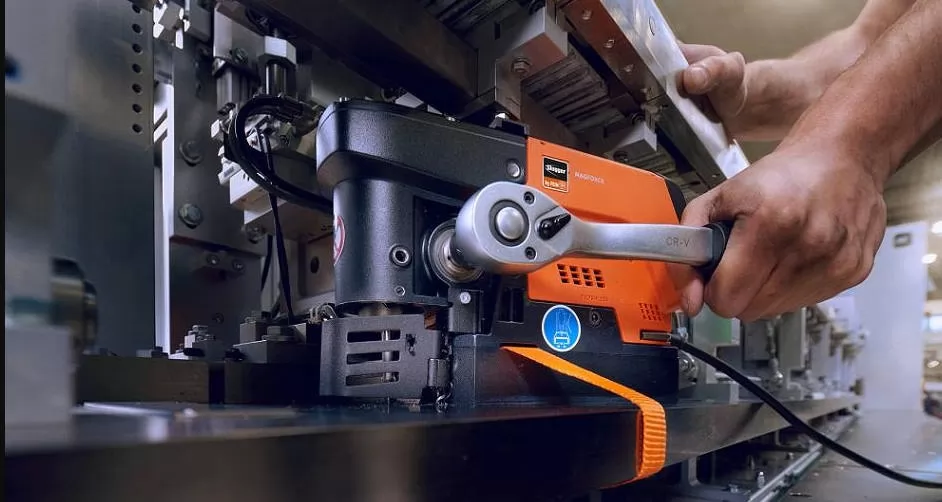
6. Quality Control and Testing
-
Every unit undergoes multiple tests:
- Magnetic Force Test: Using hydraulic cylinders to measure adhesion (e.g., up to 10,000 N).
- High-Voltage Test: To check insulation and electrical safety.
- Functional Test: Full operation simulation, including drilling cycles.
- Vibration and Noise Checks: Ensuring compliance with safety standards.
- Defective units are reworked or scrapped. BDS, for example, inspects each machine before shipping.
7. Finishing and Packaging
- Surfaces are painted or anodized for corrosion resistance.
- Accessories (bits, cases) are added.
- Units are packed in protective cases with manuals and shipped globally.
The entire process can take days to weeks per batch, with factories like BDS producing over 27 models to meet diverse needs.

Conclusion
The manufacturing of magnetic drills is a blend of advanced engineering, precise craftsmanship, and rigorous quality assurance, ensuring these tools perform reliably in demanding environments. Understanding the magnetic materials—whether electromagnets for flexibility or permanent magnets for simplicity—highlights the innovation behind their design. As industries evolve, manufacturers continue to refine processes for efficiency and sustainability. If you're in metalworking, investing in a quality magnetic drill can significantly boost productivity. For more details on specific models, consult manufacturers like BDS or Hougen.
