
Detailed Guide to Permanent Magnets and Electromagnets.
Magnets have fascinated humans for centuries—think about how ancient sailors relied on them for navigation, or how we casually stick notes on our refrigerators today. They're everywhere, really. Broadly speaking, magnets fall into two main categories: permanent magnets and electromagnets. Both harness magnetic fields, but they work in fundamentally different ways. In this piece, I'll dive into the details of each, drawing on their history, properties, and real-world applications. It's one of those topics in physics that feels both timeless and incredibly practical.
The story of magnets goes back thousands of years. Natural lodestones (magnetite rocks) were known to the ancient Greeks and Chinese, who noticed their ability to attract iron. By the 11th-12th centuries in China, this led to the invention of the magnetic compass—a game-changer for exploration. Fast-forward to today, and magnets power everything from electric cars to medical scanners.
Permanent Magnets:
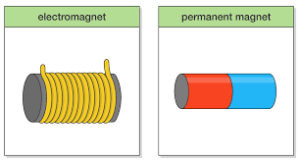
A permanent magnet is exactly what it sounds like: it keeps its magnetic properties indefinitely, even after the external magnetizing field is removed. These are made from "hard" ferromagnetic materials—think iron, nickel, cobalt, and their alloys—that have been specially processed to align their internal magnetic domains. Once aligned, they're tough to demagnetize, which is why they're called "permanent."
Common types include:
Neodymium (NdFeB): The strongest commercially available, made from neodymium, iron, and boron. These little powerhouses are in everything from headphones to wind turbines.
- Samarium Cobalt (SmCo): Great for high-temperature environments.
- Alnico (aluminum-nickel-cobalt): Classic for guitars and sensors.
- Ferrite/Ceramic: Cheap and corrosion-resistant, perfect for fridge magnets.
How Permanent Magnets Are Made?
Permanent magnets are made using various manufacturing processes, each of which has its advantages and disadvantages. Here are some of the most common methods used to make permanent magnets:
Sintering: This method involves mixing the ferromagnetic material with a binder to form a powder, which is then pressed into the desired shape and heated in a fuace. The high temperature causes the particles to fuse, forming a solid block of material with magnetic properties.
Bonded Magnets: In this method, the ferromagnetic material is mixed with a polymer binder and then molded into the desired shape. This method is often used to create small, complex shapes that cannot be easily made using other methods.
Injection Molding: This process involves mixing the ferromagnetic material with a polymer binder and then injecting it into a mold under high pressure. The mold is then cooled, and the magnet is removed from the mold.
Extrusion: This method is similar to injection molding, but instead of injecting the material into a mold, it is extruded through a die to form a specific shape. This method is often used to make long, thin magnets.
Uses of Permanent Magnets:
Permanent magnets are used in a wide variety of applications, ranging from everyday objects to complex industrial equipment. Here are some common uses of permanent magnets:
- Electric Motors:Permanent magnets are widely used in electric motors to generate the magnetic field that drives the rotor. The strength of the magnetic field determines the motor's torque, and the speed of the motor is controlled by changing the current.
- Speakers:Permanent magnets are used in speakers to generate the magnetic field that moves the speaker cone. When an electric current passes through the coil attached to the cone, it interacts with the magnetic field, causing the cone to move and generate sound waves.
- MRI Machines: Permanent magnets are used in MRI machines to create a strong magnetic field that aligns the protons in the body's tissues. When a radio wave is applied, the protons absorb the energy and release it, allowing the MRI machine to create a detailed image of the body's inteal structures.
- Magnetic Separators:Permanent magnets are used in magnetic separators to remove magnetic materials from a mixture. The mixture is passed through a magnetic field, which attracts the magnetic particles and separates them from the non-magnetic particles.
Electromagnets:
An electromagnet is a type of magnet that is created by passing an electric current through a coil of wire. The wire is often wound around a core made of a ferromagnetic material, such as iron. The magnetic field produced by the electromagnet can be controlled by changing the amount of current flowing through the wire. Electromagnets are temporary magnets because their magnetic field only exists when current is flowing through the coil. Electromagnets are often used in place of permanent magnets because they can generate stronger magnetic fields. They are also useful because their magnetic field can be tued on and off by controlling the electric current flowing through the wire.
How do Electromagnets work?
To understand how an electromagnet works, it is important to first understand how magnets work. Magnets have two poles, north and south, and are surrounded by a magnetic field. When two magnets are brought near each other, the opposite poles will attract each other, and the like poles will repel each other.
An electromagnet works by using an electric current to create a magnetic field. When an electric current flows through a wire, it creates a magnetic field around the wire. The strength of the magnetic field depends on the amount of current flowing through the wire. The magnetic field created by a single wire is weak, but when the wire is wound into a coil, the magnetic fields from each loop of wire add together to create a much stronger magnetic field. This is why electromagnets are made by wrapping a wire around a ferromagnetic core. The core amplifies the magnetic field generated by the wire, making it much stronger. The strength of the magnetic field generated by an electromagnet can be controlled by adjusting the amount of current flowing through the wire. When the current is increased, the magnetic field becomes stronger, and when the current is decreased, the magnetic field becomes weaker.
Benefits of Electromagnets:
Some of the benefits of electromagnets include:
- Control and Precision:
Electromagnets can be switched on and off by controlling the flow of electricity, allowing for precise control of the magnetic field strength and direction. This makes them useful in applications such as magnetic levitation and magnetic separators.
- Efficiency:
Electromagnets can be made to produce a strong magnetic field using relatively small amounts of electrical power. This makes them more efficient than permanent magnets in many applications.
- Versatility:
Electromagnets can be designed to produce magnetic fields of varying strengths and sizes, making them suitable for a wide range of applications.
- Safety:
Electromagnets are safe to handle as they do not retain a magnetic field when the current is tued off, unlike permanent magnets.
- Flexibility:
Electromagnets can be designed and configured to fit a variety of different shapes and sizes, making them adaptable to a range of applications.
Conclusion:
Permanent magnets and electromagnets are both essential components of mode technology and have a wide range of applications. The importance of permanent magnets and electromagnets can be seen in their widespread use in many different industries, including manufacturing, transportation, telecommunications, and medicine. Without these technologies, many mode conveniences and advances would not be possible. Mag Spring is a reputable permanent magnets and electromagnets supplier. We can provide you with the high-quality items that you require.
