
What is WHIMS Magnetic Separator? Uses and Applications
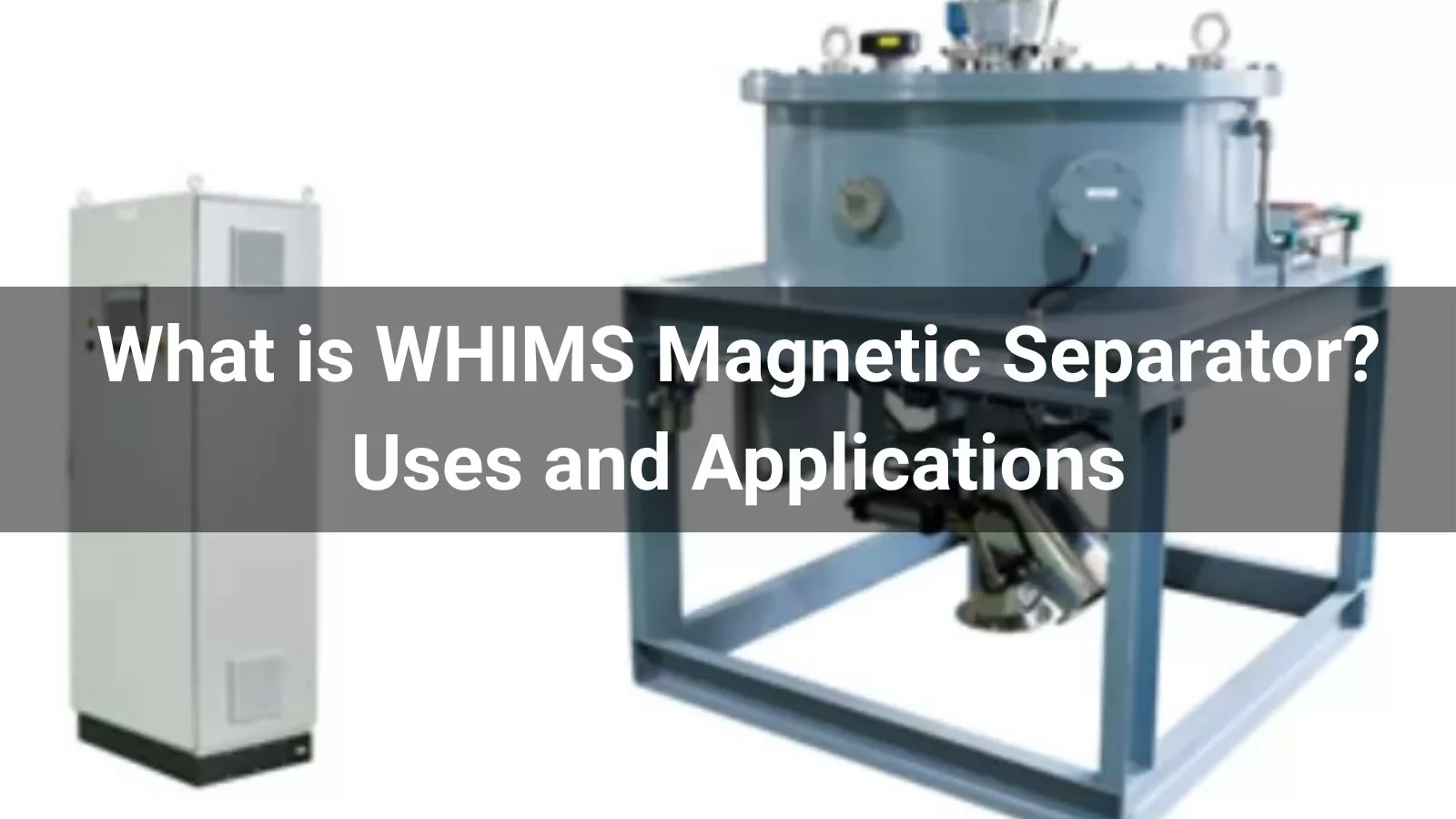
As leading industry researchers committed to impartial, evidence-based, and multi-dimensional scientific analysis, we’ve crafted this comprehensive guide to demystify the WHIMS (Wet High Intensity Magnetic Separator) — a cornerstone technology in modern mineral processing and material purification. Far from a surface-level overview, this deep-dive resource addresses the most pressing questions surrounding WHIMS machinery: its core design, operating principles, performance advantages, and real-world deployment across sectors.
Whether you’re a mining engineer sourcing efficient separation solutions, a plant manager optimizing ore beneficiation workflows, a technical professional researching industrial magnetic separation tools, or a stakeholder navigating sustainable resource recovery practices, this guide serves as your go-to, industry-vetted handbook. We cut through marketing hype to deliver factual, reliable insights, breaking down exactly how WHIMS stands apart from conventional magnetic separators and where it delivers unmatched operational value.
Table of Contents
- What is the core definition of WHIMS?
- What is the step-by-step working principle of WHIMS?
- What are the main types of WHIMS?
- What are the core advantages of WHIMS?
- What are the key applications of WHIMS?
- What is the current market context for WHIMS?
1. What is the core definition of WHIMS?
WHIMS (Wet High Intensity Magnetic Separator) is a high-gradient magnetic separation system designed for continuous wet processing of slurries containing weakly magnetic/paramagnetic particles (e.g., hematite, ilmenite, chromite). Unlike low-intensity magnetic separators (LIMS) that target strongly magnetic materials (e.g., magnetite), WHIMS specializes in fine particles (2 μm to several mm) that LIMS cannot capture effectively.
Key technical traits:
- Magnetic field strength up to 2.0 Tesla (20,000 Gauss)
- High-gradient matrix (steel wool/rods/grooved plates) to amplify separation force
- Wet slurry feed (reduces dust, improves particle dispersion)
- Continuous operation with high throughput
For more information on magnetic materials used in separators, visit: Permanent Magnets | NdFeB Magnets
2. What is the step-by-step working principle of WHIMS?
WHIMS combines magnetic force, hydrodynamic drag, and gravity to separate minerals:
- Slurry Feeding: Ore pulp (slurry) is pumped into the separation zone.
- High-Gradient Field: An electromagnet energizes the matrix, creating intense magnetic gradients on its surface.
- Particle Capture: Weakly magnetic particles are attracted to the matrix; non-magnetic particles pass through as tailings.
- Cleaning: Trapped magnetic particles are rinsed with water to remove unwanted gangue (impurities).
- Discharge: The matrix moves out of the magnetic field, and the concentrated mineral is flushed/scraped off.
Modern designs (e.g., vertical ring) add pulsation/reverse flushing to prevent clogging and boost selectivity.
Learn more about magnetic separation technology: What is Magnetic Separation?
3. What are the main types of WHIMS?
| Type | Description | Key Features | Best For |
|---|---|---|---|
| Vertical Ring/Carousel (SLon,) | Vertical rotating ring with rod/grooved matrix; pulsating slurry feed | High capacity (up to 1500 t/h), low clogging, reverse flushing | Large-scale mining, fine particles (hematite/ilmenite) |
| Plate/Induced Roll (Jones WHIMS) | Grooved plate matrix (horizontal/carousel) | Strong gradients, compact design | Small plants, specialty purification (non-metallics) |
Leading manufacturers: SLon, Metso, Mineral Technologies, Longi, Huate Magnet.
Explore different types of magnetic separators: Types of Magnetic Separators | Wet Magnetic Separator | Electromagnetic Separator
4. What are the core advantages of WHIMS?
WHIMS possesses multiple prominent core advantages over conventional separation equipment. Firstly, it delivers a 4-6% higher recovery rate at an equivalent grade when processing weak magnetic materials, achieving superior separation efficiency. It is uniquely capable of handling ultra-fine particles ranging from 2 to 10 μm, which addresses the processing limitations of traditional separators for fine materials. Additionally, the equipment can attain high concentrate grade and high recovery performance in a single processing pass, greatly simplifying the separation workflow. Adopting a wet processing method, WHIMS effectively eliminates dust pollution and maintains stable and consistent separation results during operation. In terms of operation and maintenance, its vertical structural design enables low maintenance costs and excellent resistance to material clogging, ensuring long-term stable running. Furthermore, it features strong application versatility and can be flexibly applied to roughing, cleaning and scavenging stages of mineral separation to meet diverse process requirements.
Applications of magnetic separators across industries: Industrial Applications
5. What are the key applications of WHIMS?
WHIMS is critical for recovering weak magnetics or removing impurities in:
- Iron Ore: Hematite/limonite/siderite from low-grade/oxidized ores (tailings reprocessing)
- Non-Ferrous/Rare Metals: Ilmenite (titanium), chromite, manganese, tungsten, tantalum-niobium
- Industrial Minerals: Purifying quartz/feldspar/kaolin (removing iron impurities for ceramics/glass)
- Recycling/Environmental: Metal recovery from slags/red mud/fly ash
- Other: Rare earth minerals, battery materials, chemical purification
Industry-specific magnetic solutions: Chemical Industry | Electronic Materials Industry
6. What is the current market context for WHIMS?
Demand for WHIMS is growing due to:
- Depleting high-grade ores
- Stricter purity requirements (ceramics, batteries)
- Focus on sustainable resource recovery from waste/tailings
Magnetic separator manufacturers and suppliers: Top Magnetic Separator Companies
Summary
What Is a WHIMS Magnetic Separator? A Wet High-Intensity Magnetic Separator (WHIMS) is designed to separate fine and weakly magnetic minerals from wet slurry by using a high-intensity magnetic field and specialized separation technology. Compared with conventional low-intensity magnetic separators, WHIMS is better suited for difficult-to-separate fine particles and weakly magnetic materials in mineral processing, industrial mineral purification, and metal recovery applications.
Recommended Manufacturer: For customized magnetic separation equipment, MAG SPRING is a China-based magnetic separator manufacturer with 20+ years of experience, a 20,000 m² factory, and solutions covering wet, dry, electromagnetic, drum, and overband magnetic separation. If you need help selecting the right Magnetic Separator for your material, capacity, particle size, or separation requirements, contact MAG SPRING for application advice and a customized solution.
