
Rare Earth Permanent Magnets Buyer's Guide: How to Source Reliable, High-Performance Magnets & Avoid Fakes
The 2026 Comprehensive Buyer's Guide to Sourcing High-Performance NdFeB (Neodymium-Iron-Boron) Rare Earth Permanent Magnets focuses on avoiding counterfeit or substandard products, ensuring thermal reliability, corrosion protection, and stable supply amid ongoing market volatility. NdFeB magnets power critical applications like electric vehicle (EV) traction motors, wind turbine generators, industrial automation, and renewable energy systems. However, grade inflation, inconsistent batches, and raw material price swings (driven by PrNd oxide fluctuations) create real risks of performance failure or cost overruns.
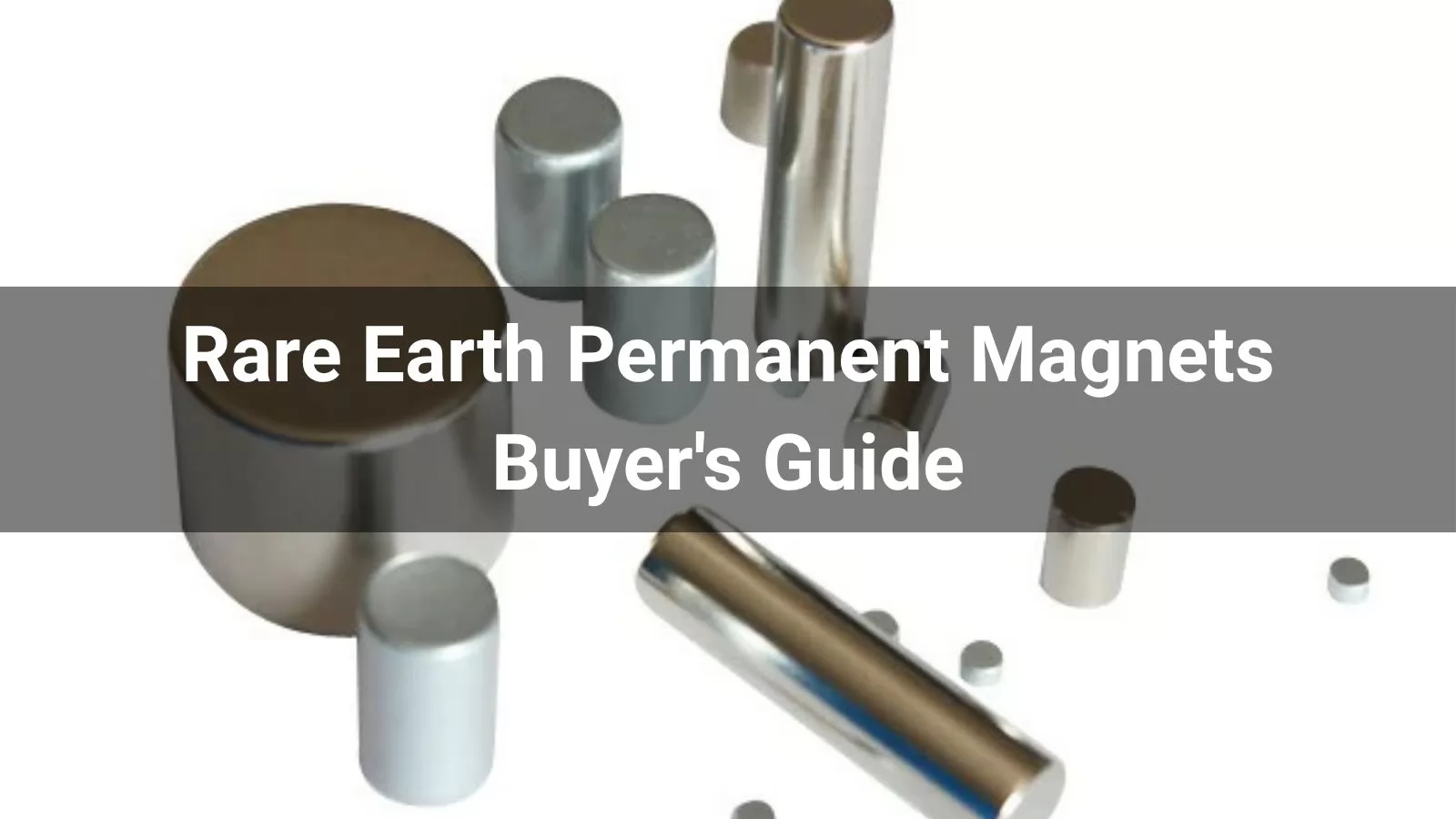
This guide draws from industry-standard testing methods, material science principles, and current market insights to help engineers and procurement teams make informed decisions.
1. Verifying Authentic Grades and Avoiding Performance Fraud
The most prevalent issue in the NdFeB market is grade inflation, where suppliers label magnets as high-grade (e.g., N52) but deliver lower performance (often equivalent to N35–N42). N52 magnets achieve a maximum energy product (BHmax) of around 50–52 MGOe, with remanence (Br) up to ~14,800 Gauss, while lower grades drop significantly. For more technical details on N52 magnets, visit N52 Neodymium Magnets.
Key verification methods include:
- Request a Full Hysteresis Loop (Demagnetization Curve): Insist on a genuine B-H curve from a permeameter or hysteresisgraph. This plots remanence (Br), coercivity (Hcj/Hci), and BHmax accurately. Forged reports often lack this detailed curve. Learn more about hysteresis graph testing at Hysteresis Graph Test.
-
Flux Density and Total Flux Testing:
- Use a Gaussmeter (with axial or transverse probe) to measure surface magnetic flux density (in Gauss or Tesla). Position the probe consistently (e.g., at the pole face center) in a non-magnetic environment. For N52, expect ~13,000–14,500 Gauss on the surface depending on size/shape; readings 10–20% below expected indicate adulteration.
- Employ a fluxmeter with Helmholtz coil for total magnetic flux (Φ). Compare against theoretical values for the grade and geometry.
- Density Measurement: Genuine sintered NdFeB density ranges from ~7.4–7.6 g/cm³ across grades (minimal variation from N35 to N52, as density is more influenced by composition than grade). Lower readings suggest excessive recycled material, voids, or impurities. For details on N35 magnets, see N35 Neodymium Disc Magnet for Electronics.
- Additional Checks: Pull-force tests (e.g., lifting calibrated weights) or ping tests can provide quick indicators, but combine with professional tools for reliability. Always sample from production batches, not prototypes.
2. Thermal Stability and Grade Selection for Demanding Environments
NdFeB magnets lose strength irreversibly above their maximum operating temperature due to reduced coercivity. Select grades with sufficient intrinsic coercivity (Hcj) margin above your application's demagnetizing field. High temperature NdFeB magnets are available at High Temperature Neodymium Magnets.
Standard temperature suffixes and maximum recommended operating temperatures (based on industry data):
- N (no suffix): Up to 80°C – Suitable for consumer electronics and low-heat sensors.
- M: Up to 100°C – Basic industrial use.
- H: Up to 120°C – Motors, actuators.
- SH: Up to 150°C – EV traction motors, wind generators.
- UH: Up to 180°C – High-heat automotive and robotics. See N38UH magnets at N38UH Magnets.
- EH: Up to 200°C – Aerospace, heavy machinery.
- AH/VH: Up to 230°C – Extreme environments like downhole tools.
Pro Tip: For 5–10+ year reliability, choose a grade where Hcj exceeds your operating point by a safety factor (e.g., 20–30%). High-grade N52 often limits to lower temps without suffixes; prioritize H/SH/UH variants for heat-exposed apps. Learn more about NdFeB magnet grades at NdFeB Magnets Technical Information.
3. Corrosion Protection: Coatings and Compliance
NdFeB's high iron content makes it vulnerable to oxidation ("magnet cancer"). Coatings form the primary barrier. Epoxy-coated neodymium magnets are available at Neodymium Epoxy Magnets.
Comparison of common coatings:
- NiCuNi (Nickel-Copper-Nickel): Industry standard for indoor/general use; good aesthetics, wear resistance, and moderate corrosion protection (~48–96 hours salt spray). Conductive surface.
- Epoxy (Black/Grey): Superior in humid, mildly acidic, or marine-like conditions; non-conductive, high chemical resistance, impact-tolerant (often >500 hours salt spray).
- Parylene: Ultra-thin, pinhole-free conformal coating; FDA-approved for medical/aerospace; excellent corrosion/chemical resistance without affecting magnetic gaps or properties.
- Everlube/MoS2: Dry-film lubricant for high-friction/sliding applications; combines corrosion protection with low wear.
Always require valid RoHS and REACH certifications to confirm no hazardous substances (e.g., hexavalent chromium). For harsh environments, prioritize epoxy or Parylene over basic NiCuNi. See coated NdFeB magnets at Neodymium Iron Boron Magnet with Coating.
4. Supply Chain Management in a Volatile 2026 Market
PrNd oxide (key raw material) drives ~70–80% of NdFeB costs. In 2026, prices show volatility: Nd/PrNd oxide hovered around 990,000 CNY/ton in March, with forecasts averaging $87,000–$93,000 USD/ton amid EV/wind demand and geopolitical factors (e.g., export controls). For NdFeB price guidance, visit Neodymium Iron Boron NdFeB Magnet Price Guide.
Strategies to mitigate:
- Price Adjustment Formulas: Tie contracts to indices like Asian Metal or Shanghai Metals Market for PrNd oxide to share risk.
- Long-Term Agreements and Inventory Buffers: Secure volume commitments with 3–6 month buffers for critical parts.
- Customization Expertise: Top suppliers handle multi-pole magnetization, FEA magnetic circuit design, complex shapes (e.g., arc segments for PMSM motors), and tight tolerances. See arc magnets at Arc Magnets.
- Lead Times: Standard items: 3–4 weeks; custom/high-coercivity/coated: 6–8+ weeks. Factor in global disruptions.
5. Supplier Vetting Checklist for 2026
Use this to qualify suppliers (focus on China-based leaders, as they dominate ~90% of global production). For top NdFeB magnet suppliers, see Top NdFeB Magnet Suppliers in World.
- Certifications: ISO 9001 mandatory; IATF 16949 essential for automotive/EV reliability.
- Batch Consistency: Request CPK data (process capability) for Br, Hcj across recent batches (aim for >1.33).
- In-House Testing: Salt spray chambers, PCT (pressure cooker), hysteresisgraphs, and EDX composition analysis.
- Sampling: Demand "golden samples" from mass production runs.
- Contract Protections: Clear specs for Br/Hcj tolerances, return/replacement for failures, and third-party lab verification rights.
- Reputation and Scale: Look for established players with 1,000+ tons/year capacity, export experience, and motor-grade focus. See motor magnets at Motor Magnets.
Reputable examples include Ningbo Yunsheng, JL Mag, Zhaobao, and others with strong IATF/ISO credentials and EV/wind portfolios. For more on NdFeB magnets, visit the main NdFeB page at NdFeB Magnets.
By following this framework—rigorous testing, appropriate grade/coating selection, and strategic sourcing—you minimize risks in the 2026 NdFeB market and secure reliable, high-performance magnets for mission-critical applications. For a comprehensive guide to NdFeB magnets, see Everything You Need to Know About NdFeB Magnets.
Buy Rare Earth Magnets - Frequently Asked Questions (FAQ)
1. How to verify genuine NdFeB magnets & grades (N52, N50M, N42SH)?
Check magnetic performance, coating quality, dimensional accuracy, and batch consistency. Low‑cost fakes usually have weak magnetism, poor coating, and unstable properties. For more details, visit NdFeB Magnets Technical Information.
2. Quick ways to test Br, Hcj, (BH)max without trusting only reports?
Use a gauss meter, flux meter, or pull‑test fixture for on‑site comparison. Large deviations from labeled specs mean lower actual grade. Learn about magnetic measurement at Magnetic Measurement.
3. Magnet loss at 80–200°C & how to choose temperature grades?
Standard N grades lose significant strength above 80°C. Use M(100°C), H(120°C), SH(150°C), UH(180°C), EH(200°C) for higher temps to avoid permanent demagnetization. High temperature magnets information: High Temperature Magnets and High Temp Neodymium Magnets.
4. Will magnets degrade after 5–10 years? Which are most stable?
Properly used NdFeB magnets have very slow natural degradation. High‑coercivity grades (SH, UH, EH) resist long‑term demagnetization best. See Everything You Need to Know About NdFeB Magnets for stability details.
5. How to fix large batch variation & ensure consistency?
Require suppliers to provide batch test reports and pre‑shipment samples. Reliable factories use strict material control and full inspection. Find trusted suppliers at Top NdFeB Magnet Suppliers in the World.
6. What must a credible test report include?
Magnetic specs (Br, Hcj, (BH)max), grade, dimensions, coating, test temperature, test equipment, date, and factory/third‑party certification. Reference NdFeB Magnets Technical Information for standard report requirements.
7. Are magnets & coatings toxic? How to confirm compliance?
NdFeB and normal coatings (NiCuNi, Zn, Epoxy) are safe under normal use. Ask for RoHS, REACH, MSDS, and food‑contact certificates if needed. For coating details, visit NdFeB Magnets with Coating.
8. Corrosion resistance comparison of common coatings?
NiCuNi > Epoxy > Zn > Parylene/Everlube for most environments. Use Epoxy/Parylene for high humidity or chemical exposure. See Neodymium Epoxy Magnets and Teflon Coated Magnets for more.
9. How to reduce chipping, cracking & breakage?
Use shock‑proof packaging, avoid dropping or impact, handle gently, and select appropriate thickness and material for your application. Explore durable magnet options at Rare Earth Magnets.
10. Most cost‑effective procurement strategy?
Buy the minimum grade you actually need, not over‑specified. Long‑term cooperation with stable suppliers reduces total cost better than cheap low‑quality magnets. Check price guides at NdFeB Magnet Price Guide and find reliable manufacturers at Best NdFeB Magnet Manufacturers.
Additional Resources:
- Rare Earth Magnets Overview
- Permanent Magnet Information
- Buy Permanent Magnets
