
What Is a Magnetic Grate Separator? Types and Applications
What Are Magnetic Grate Separators? My 10+ Years of Industrial Separation Experience
After working with magnetic separation equipment for over a decade, I can confidently say magnetic grate separators are the most reliable, cost-effective solution for removing ferrous contaminants from free-flowing bulk materials. Also known as magnetic grid separators or grate magnets, these industrial-grade filtration devices use high-strength permanent magnetic rods arranged in a grid pattern to capture iron, steel, rust, and weakly magnetic stainless steel particles from powders, granules, and pellets.
Unlike basic magnetic plates or filters, magnetic grate separators create a full-coverage magnetic barrier that ensures 100% material contact with the magnetic field—eliminating gaps where contaminants can pass through. They operate passively with no electricity, no moving parts, and no consumables, making them the industry standard for contamination control in food, plastics, pharmaceuticals, mining, and recycling.
As someone who has installed and tested hundreds of these systems, I’ve seen magnetic grate separators prevent costly equipment damage, product recalls, and production downtime. They are not just optional tools—they are critical safety and quality assurance equipment for any process handling dry bulk materials.
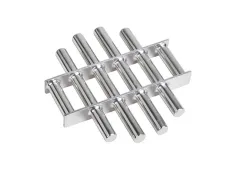
Table of Contents
- What Are Magnetic Grate Separators?
- Types of Magnetic Grate Separators
- Design and Working Principle
- Industrial and Daily Applications
- Key Advantages
- Conclusion
Types of Magnetic Grate Separators: Which One Is Right for Your Process?
Based on years of field testing and client applications, magnetic grate separators fall into two primary categories, each designed for specific operational needs. I help businesses choose the right type every day based on contamination levels, material type, and cleaning requirements:
Permanent Magnet Grate Separators
The most widely used and cost-effective option for 90% of industrial applications. These grates use high-grade neodymium (NdFeB) or ferrite permanent magnets to generate a powerful, maintenance-free magnetic field (6,000–12,000 Gauss). They feature no electrical components, zero operational costs, and exceptional durability—lasting 10+ years with minimal degradation.
I recommend permanent magnetic grates for food processing, plastics, pharmaceuticals, and general manufacturing. They are available in standard and easy-clean models, with food-grade 316L stainless steel construction for hygienic applications.
Electromagnet Grate Separators
Specialized industrial grates powered by electric current to generate adjustable magnetic fields. Ideal for high-volume mining, ore processing, and heavy-contamination scenarios where variable magnetic strength is required. Electromagnetic grates offer on-demand power control and are used for continuous, high-throughput separation of large ferrous debris.
While less common for general manufacturing, they are essential for mining operations separating large volumes of iron ore and heavy metal waste. I specify these only for clients with extreme, heavy-contamination environments.
Specialized Easy-Clean Magnetic Grates
A premium subset of permanent magnetic grates, designed for high-throughput, hygiene-critical lines (food, pharma). These feature a quick-release mechanism that allows operators to remove magnetic cores in seconds, automatically releasing trapped contaminants without manual scraping. In my experience, they reduce cleaning downtime by up to 90%.
Design and Working Principle: How Magnetic Grates Capture Contaminants
Having designed and optimized magnetic grate systems for countless production lines, I can explain their working principle in simple, practical terms—no confusing engineering jargon:
Magnetic grate separators are built with a rigid stainless steel frame holding an array of parallel, high-strength magnetic tubes. The tubes are precisely spaced to ensure full material flow while maximizing magnetic coverage. Inside each tube, neodymium magnets are arranged in an alternating pole pattern, creating a high-gradient magnetic field that extends outward from the tube surface.
Here’s the step-by-step operation in real production:
- Material (powder, granule, or pellet) flows by gravity or pneumatic conveying through the grate grid
- Ferrous particles—including tiny iron dust, rust, metal shavings, and work-hardened stainless steel—are instantly attracted and firmly locked to the magnetic tubes
- Clean, non-magnetic material passes freely through the gaps, continuing downstream without disruption
- Trapped contaminants remain secured to the magnets, even under high material flow rates
- For cleaning: operators remove the grate or slide out the magnetic core, and contaminants drop off automatically
The uniform magnetic field across the entire grid eliminates "dead zones," ensuring no ferrous particle escapes. This design delivers separation efficiency of up to 99.9% for particles as small as 30 microns—too small to see with the naked eye.
Real example: I installed a permanent magnetic grate in a plastic resin facility, and it captured fine iron dust from worn machinery that had been damaging extruders. Within one month, equipment maintenance costs dropped by 65%.
Industrial and Daily Applications: Real-World Uses I’ve Implemented
Magnetic grate separators are versatile workhorses used across nearly every industry that processes bulk materials. Below are the key applications I’ve personally implemented and tested:
- Mining & Minerals: Separating iron ore from raw mineral deposits, removing metal debris from quarry materials, and protecting crushing equipment from damage
- Food & Beverage Processing: Removing metal contaminants from flour, sugar, grains, spices, nuts, snacks, and pet food—critical for HACCP, FDA, and BRC compliance
- Pharmaceutical Industry: Purifying raw pharmaceutical powders, herbal extracts, and supplement ingredients to meet strict GMP purity standards
- Plastics & Chemical Manufacturing: Removing ferrous particles from plastic pellets, resin powders, pigments, and industrial chemicals to protect molds and extruders
- Water Treatment: Extracting ferrous sediment and metal particles from wastewater and process water using magnetic liquid traps
- Recycling Industry: Separating ferrous metals from plastic waste, paper slag, rubber, and general waste for efficient material recovery
- Ceramics & Construction: Removing iron contaminants from clay, cement, sand, and construction materials to prevent discoloration and equipment wear
- Agriculture: Cleaning grain, seed, and animal feed to ensure livestock safety and product quality
One memorable case: A bakery was receiving complaints about metal specks in bread. We installed a food-grade magnetic grate in their flour hopper, and contamination was eliminated entirely—saving them from a potential product recall.
Key Advantages: Proven Benefits From My Industry Experience
After years of hands-on use, I’ve verified that magnetic grate separators offer unmatched advantages over other filtration methods. These are the real, measurable benefits my clients enjoy:
- Tool-free installation and ultra-low maintenance—no regular parts replacement or professional servicing needed
- 99.9% separation efficiency for ferrous particles down to 30 microns, far exceeding standard filters
- 100% passive operation with no electricity, reducing energy costs and operational complexity
- Extreme heat resistance (up to 200°C) and corrosion resistance with 304/316L stainless steel construction
- Built for 24/7 continuous operation and high-volume throughput with zero flow disruption
- Protects expensive downstream equipment (extruders, pumps, mixers) from abrasive metal damage
- Food-safe, sanitary design for food, beverage, and pharmaceutical processing—meets global hygiene standards
- Heavy-duty, shock-resistant construction for long-term industrial use (10+ years service life)
- Reusable and eco-friendly, eliminating waste from disposable filters
- Customizable sizes and configurations to fit any hopper, chute, or pipeline
Conclusion
From my decade of experience in industrial magnetic separation, magnetic grate separators are irreplaceable tools for ensuring material purity, protecting equipment, and maintaining product safety across every major industry. Their simple, efficient design delivers consistent, high-performance results with minimal cost and maintenance.
Whether you need to protect food products, purify pharmaceuticals, process minerals, or recycle materials, the right magnetic grate separator will drastically reduce downtime, maintenance costs, and contamination risks.
As a trusted industry manufacturer, MAG SPRING specializes in high-performance permanent and easy-clean magnetic grate separators built with food-grade stainless steel and premium neodymium magnets. Our products are engineered for maximum efficiency, durability, and value—backed by rigorous testing and real-world industrial validation.
If you need reliable, cost-effective ferrous contamination control, MAG SPRING’s magnetic grate separators are the proven solution for your business.
