
The Role of High-Performance Magnets in Modern Electric Motors
Electric motors are the workhorses of the modern industrial world, powering everything from electric vehicles (EVs) and robotic arms to household appliances and HVAC systems. At the heart of every high-efficiency motor lies a critical component: the motor magnet. These powerful devices convert electrical energy into mechanical energy through the interaction of magnetic fields, determining the motor's torque, speed, efficiency, and overall performance.
As industries push for greater energy efficiency and miniaturization, the demand for advanced magnetic materials has surged. This article explores the types of motor magnets, their distinct properties, and why selecting the right magnetic solution is vital for engineering success.
Why Motor Magnets Matter: Key Advantages
The integration of high-grade permanent magnets into motor design offers transformative benefits over traditional wound-field motors:
- Superior Efficiency: Permanent magnets eliminate the need for external excitation current, reducing resistive losses (I²R losses) in the rotor. This results in significantly higher energy conversion efficiency, often exceeding 95% in premium models, which translates to lower power consumption and reduced heat generation.
- High Torque Density: Materials like Neodymium Iron Boron (NdFeB) generate intense magnetic fields in compact volumes. This allows engineers to design smaller, lighter motors that deliver exceptional torque, a crucial factor for electric vehicles and aerospace applications where weight is paramount.
- Enhanced Reliability: With fewer moving parts and no slip rings or brushes (in brushless designs), magnet-based motors experience less mechanical wear, leading to longer operational lifespans and reduced maintenance costs.
- Precise Control: The stable magnetic field provided by permanent magnets enables precise control over speed and position. This is essential for servo motors and stepper motors used in robotics and CNC machinery.
- Environmental Impact: By improving energy efficiency, these motors reduce the global carbon footprint of industrial operations and transportation.
Critical Factors in Selecting Motor Magnets
Choosing the optimal magnet for a specific motor application requires a deep understanding of material science and operational requirements. Here are the five key considerations:
1. Material Type and Magnetic Properties
Different applications demand different magnetic materials. The primary choices include:
- Neodymium (NdFeB): The strongest commercial permanent magnet available. Ideal for high-torque, compact applications like EV traction motors and drone propulsion. Learn more about our high-strength Neodymium motor magnets.
- Samarium Cobalt (SmCo): Offers excellent thermal stability and corrosion resistance, making it perfect for high-temperature environments (up to 350°C) found in aerospace and defense motors.
- Alnico: Known for exceptional temperature stability and resistance to demagnetization, though with lower coercivity. Often used in sensors and classic motor designs. Explore our Alnico magnet solutions.
- Ferrite (Ceramic): A cost-effective solution for applications where weight and extreme strength are less critical, such as in household appliances and basic industrial fans. View our Ferrite magnet range.
2. Temperature Stability
Magnetic strength decreases as temperature rises. Each material has a maximum operating temperature and a Curie temperature (where magnetism is lost). For instance, standard NdFeB may degrade above 80°C unless doped with Dysprosium, whereas SmCo remains stable at much higher temperatures. Engineers must select a grade that maintains performance under the motor's worst-case thermal conditions.
3. Geometry and Magnetization Pattern
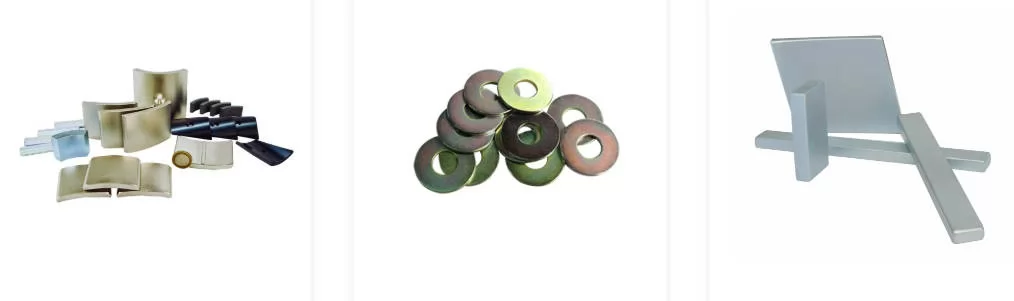
The shape of the magnet (arc, block, ring) and its magnetization direction (radial, diametral, multi-pole) directly influence the motor's magnetic circuit efficiency. Radial flux motors typically use arc-shaped magnets, while axial flux designs may use disc magnets. Precise shaping ensures optimal air gap flux and minimizes cogging torque.
4. Coercivity and Demagnetization Resistance
In high-load scenarios, the opposing magnetic field generated by the stator can partially demagnetize the rotor magnets. High intrinsic coercivity (Hcj) is essential to prevent irreversible loss of magnetic strength, ensuring the motor performs consistently over its lifetime.
5. Cost vs. Performance Trade-off
While rare-earth magnets offer superior performance, they come at a higher cost. Balancing the initial investment against long-term energy savings and performance gains is crucial. For high-volume consumer goods, Ferrite might suffice, whereas industrial servo systems justify the cost of Neodymium.
Applications Driving Demand
The versatility of motor magnets supports a wide array of specialized applications:
- Electric Vehicles (EVs): High-energy NdFeB magnets are the standard for traction motors, enabling long range and rapid acceleration.
- Robotics & Automation: Servo motors require precise positioning and high dynamic response, relying on high-grade magnets for instant torque. Check out our specialized servo motor magnets.
- Stepper Motors: Used in 3D printers and CNC machines, these motors benefit from magnets that provide distinct detent torque and smooth stepping. See our stepper motor magnet solutions.
- Industrial Drives: From pumps to compressors, efficient motors reduce operational costs in manufacturing plants.
MagSpring: Your Partner in Motor Magnet Innovation
At MagSpring, we understand that the magnet is the heart of the motor. With decades of expertise in magnetic materials and motor design, we provide tailored solutions that meet the rigorous demands of modern engineering.
Why Choose MagSpring?
- Comprehensive Material Portfolio: From cost-effective Ferrite to ultra-high-performance Neodymium and high-temp Alnico, we stock and manufacture all major grades.
- Custom Engineering: Whether you need complex arc segments for a BLDC motor or precise blocks for a stepper, our team designs magnets to fit your specific magnetic circuit and housing constraints.
- Quality Assurance: Our magnets undergo strict testing for flux density, coercivity, and dimensional tolerance, ensuring consistent performance in every batch.
- Technical Support: Our engineers don't just sell magnets; they help optimize your motor design for maximum efficiency and torque density.
Ready to elevate your motor's performance? Explore our full range of motor magnets and permanent magnet solutions today. Contact MagSpring for a consultation and discover how the right magnetic material can transform your application.
