
Bunri Magnetic Separator vs. Stearns Magnetic Separator: A Definitive Comparative Guide
Magnetic separation is a critical process across industries such as mining, food processing, recycling, and manufacturing, enabling the efficient separation of magnetic materials from non-magnetic substrates. Two prominent players in the magnetic separator market—Bunri and Stearns—offer distinct technologies tailored to diverse industrial needs.
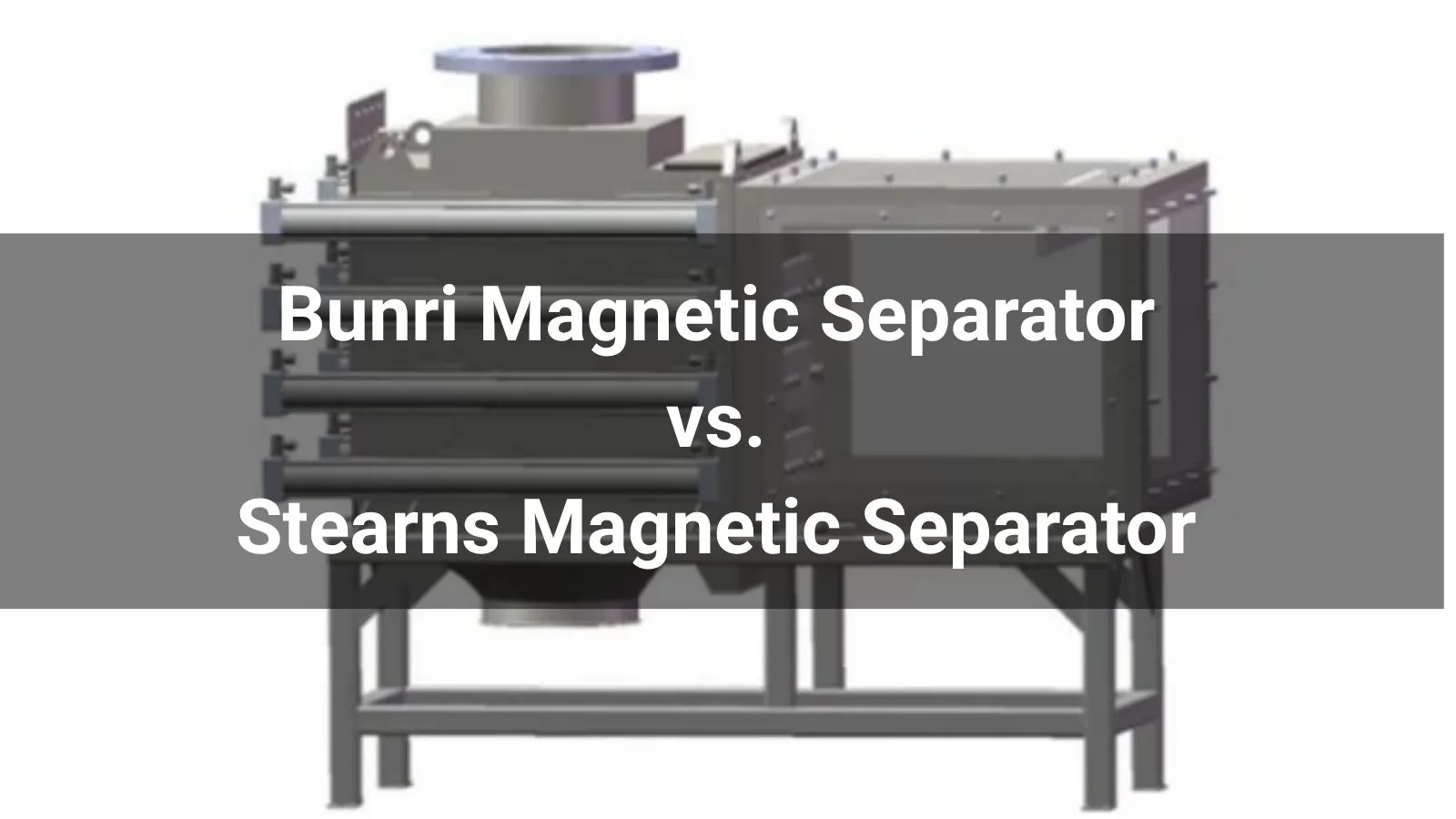
This guide provides an in-depth comparison of Bunri and Stearns magnetic separators, covering design principles, performance metrics, applications, and selection criteria to help industry professionals make informed decisions.
1. Fundamental Overview of Magnetic Separators
Before delving into brand-specific comparisons, it is essential to understand the core functionality of magnetic separators. These devices leverage magnetic force to extract ferrous contaminants or separate magnetic minerals from ore, with performance dictated by magnet type (permanent vs. electromagnetic), magnetic field strength, and mechanical design. For a foundational understanding of magnetic separation principles, refer to Wikipedia’s Magnetic Separation entry, which outlines the scientific and industrial context of this technology.
Permanent magnets—including neodymium (NdFeB), samarium cobalt (SmCo), ferrite, and alnico—are the backbone of modern separators. Detailed technical specifications for these magnet materials can be found at Mag-Spring’s Permanent Magnet Resource, a leading manufacturer of magnetic components for industrial separators.
2. Bunri Magnetic Separator: Key Features and Capabilities
2.1 Design and Technology
Bunri magnetic separators, developed by Japanese engineering firms, are renowned for precision engineering and adaptability to high-volume, fine-particle separation applications. Key design features include:
- High-Gradient Magnetic Separation (HGMS): Bunri’s core technology uses matrix materials (e.g., stainless steel wool) to amplify magnetic field gradients, enabling separation of weakly magnetic particles (e.g., rare earth minerals, hematite). This is particularly valuable in mineral processing, as detailed in HGMS Wikipedia documentation.
- Modular Construction: Bunri separators feature modular magnetic assemblies, allowing customization for specific flow rates and particle sizes. For reference on modular magnetic component design, see Mag-Spring’s Custom Magnetic Assemblies.
- Energy Efficiency: Utilizes high-performance permanent magnets (NdFeB/SmCo) to eliminate the need for continuous power input, unlike electromagnetic alternatives. Technical data on SmCo magnets for high-temperature separator applications is available at Mag-Spring’s SmCo Magnet Technical Guide.
2.2 Applications and Performance
Bunri separators excel in:
- Mineral processing (e.g., rare earth ore beneficiation)
- Electronic waste recycling (separation of magnetic metals from circuit boards)
- Pharmaceutical and food processing (fine contaminant removal, compliant with FDA standards)
Performance metrics for Bunri separators include:
- Magnetic field strength: Up to 1.8 Tesla (18,000 Gauss) for permanent magnet models
- Particle separation efficiency: >99% for particles ≥50 microns
- Operating temperature range: -20°C to 200°C (compatible with high-temperature SmCo magnets, Mag-Spring High-Temp Magnets)
3. Stearns Magnetic Separator: Core Attributes and Use Cases
3.1 Design and Technology
Stearns (a division of Columbus McKinnon Corporation) specializes in heavy-duty, industrial-grade magnetic separators designed for rugged environments. Key features include:
- Electromagnetic Core: Stearns separators predominantly use electromagnets, allowing adjustable magnetic field strength (0–2.5 Tesla) to accommodate variable feed materials. For insights into electromagnetic separator technology, refer to Mag-Spring’s Electromagnetic Separator Core Technology.
- Robust Mechanical Engineering: Built for high-impact, high-flow applications (e.g., conveyor belt systems in mining), with durable steel housings and self-cleaning mechanisms. Stearns overband separators are comparable to Mag-Spring’s Overband Magnetic Separator in design and functionality.
- Automation Compatibility: Integrates with PLC systems for real-time monitoring and adjustment, critical for large-scale industrial operations.
3.2 Applications and Performance
Stearns separators are ideal for:
- Mining and aggregate processing (removal of tramp iron from ore/concrete)
- Waste management (municipal solid waste sorting)
- Steel manufacturing (recycling of scrap metal)
Performance metrics for Stearns separators include:
- Adjustable magnetic field strength: 0.5–2.5 Tesla (electromagnetic models)
- Handling capacity: Up to 1,000 tons/hour for conveyor-based systems
- Maintenance interval: 6–12 months (self-cleaning designs reduce downtime)
4. Head-to-Head Comparison: Bunri vs. Stearns
| Criteria | Bunri Magnetic Separator | Stearns Magnetic Separator |
|---|---|---|
| Magnet Type | Permanent (NdFeB/SmCo, Mag-Spring NdFeB Magnets) | Electromagnetic (primary) / Permanent (secondary) |
| Field Strength | Up to 1.8 Tesla (fixed) | 0.5–2.5 Tesla (adjustable) |
| Energy Consumption | Low (no power for permanent magnets) | High (continuous power for electromagnets) |
| Particle Size Focus | Fine particles (≥50 microns) | Coarse particles (≥1 mm) |
| Primary Applications | Mineral beneficiation, electronics recycling, food/pharma | Mining, waste management, steel manufacturing |
| Operating Temperature | -20°C to 200°C (SmCo magnets, Mag-Spring SmCo Magnets) | -10°C to 150°C (electromagnet cooling limits) |
| Cost (Initial + Operational) | Higher upfront, lower operational costs | Lower upfront, higher operational costs (power/maintenance) |
5. Selection Criteria: Choosing Between Bunri and Stearns
Selecting the right separator depends on four critical factors:
-
Material Characteristics:
- Choose Bunri for fine, weakly magnetic particles (e.g., rare earth minerals) – leverage dry magnetic separators for low-moisture feeds.
- Choose Stearns for coarse, highly magnetic materials (e.g., tramp iron) – opt for magnetic drum separators for high-throughput applications.
- Energy Budget: Bunri is preferable for remote locations or low-energy environments; Stearns suits facilities with reliable power access.
- Industry Compliance: Bunri meets FDA/ISO standards for food/pharma (see Mag-Spring Food Industry Magnets); Stearns complies with mining/heavy industry safety standards (OSHA/ANSI).
-
Scalability:
- Bunri’s modular design (e.g., magnetic grids) suits small-to-medium scale operations.
- Stearns’ conveyor-integrated systems (e.g., magnetic pulleys) scale to large industrial sites.
6. Maintenance and Longevity
Both separators require regular maintenance, but their needs differ:
- Bunri: Permanent magnets have a lifespan of 10–15 years (minimal degradation, Mag-Spring Magnet Degradation Guide). Maintenance focuses on cleaning matrix materials and inspecting mechanical components (6-month intervals).
- Stearns: Electromagnets require cooling system checks (monthly) and coil insulation inspections (annual). Replacement of electromagnetic coils is needed every 5–7 years.
7. Industry Case Studies
7.1 Bunri Separator in Rare Earth Mining
A Japanese rare earth mining operation implemented Bunri HGMS separators to process neodymium ore, achieving 98.7% separation efficiency for 75-micron particles. The use of SmCo magnets (resistant to high-temperature ore processing) reduced downtime by 30% compared to electromagnetic alternatives (Mag-Spring Sm2Co17 Magnets).
7.2 Stearns Separator in Aggregate Processing
A U.S.-based aggregate producer installed Stearns overband separators on conveyor belts to remove tramp iron from limestone feed. The adjustable electromagnetic field allowed adaptation to varying ore compositions, reducing equipment damage by 40% and increasing throughput by 15% (Mag-Spring Overband Separator Specs).
8. Conclusion
Bunri and Stearns magnetic separators serve distinct niches in the industrial magnetic separation market:
- Bunri is the optimal choice for precision, low-energy, fine-particle separation in industries like pharmaceuticals, electronics recycling, and mineral beneficiation.
- Stearns excels in heavy-duty, high-throughput applications requiring adjustable magnetic fields, such as mining, waste management, and steel manufacturing.
For custom magnetic separator solutions tailored to specific industrial needs, consult Mag-Spring’s comprehensive product catalog, which includes permanent magnets, magnetic assemblies, and separator components compatible with both Bunri and Stearns systems. Additional technical resources on magnetic separation can be found at Wikipedia’s Magnetic Separator entry.
References
- Wikipedia contributors. (2024). Magnetic separation. In Wikipedia, The Free Encyclopedia. Retrieved from https://en.wikipedia.org/wiki/Magnetic_separation
- Mag-Spring Magnetic Components. (2026). Permanent Magnet and Separator Resources. Retrieved from https://www.mag-spring.com/
- Columbus McKinnon Corporation. (2025). Stearns Magnetic Separation Solutions. Technical Manual.
- Japan Magnetic Separator Association. (2024). Bunri HGMS Technology Whitepaper.
